
Tripping Breaker Laguna Hills, CA
(949) 996-9886
Request a Quote
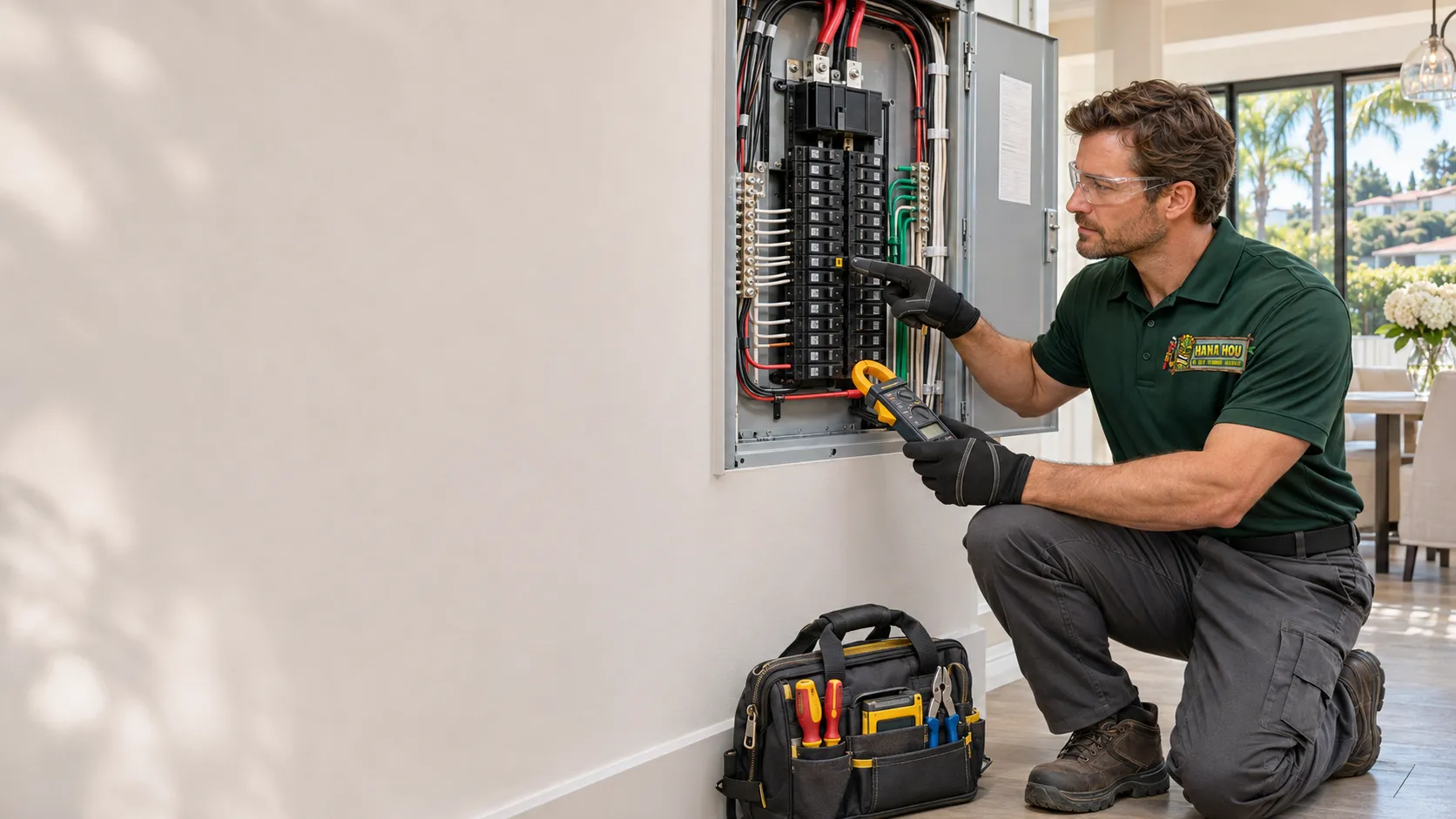
A tripping breaker means a circuit shut itself off to protect the wiring. The usual causes are an overload, a short, a ground fault or a worn breaker. Hana Hou Home electricians in Laguna Hills test the circuit to find which one it is. Picture the morning: the hair dryer is on, the toaster goes in and the whole kitchen goes quiet. Once in a blue moon that is the system doing its job. Every week, it is a symptom. See also our electrical repair page.
We start by isolating the circuit and testing it, then explain what the readings mean. Most simple cases, such as a worn breaker or a bad outlet, can be fixed in one visit with the part on the truck. Our 30 Day Encore Promise covers the same problem returning within 30 days, per the promise terms.
Short answers:
| Question | Answer |
|---|---|
| Common causes | Overload, short, ground fault, worn breaker |
| Who tests it? | Hana Hou Home licensed electricians |
| Phone | (949) 996-9886 |
| Price | Firm and in writing before work |
Leave the panel closed. If you see smoke or flames, call 911.
If you can say what was running when it tripped, we can usually spot the cause fast. Read more on the electrical page or start from the Laguna Hills page.
We measure the circuit before we swap anything, so you pay for the actual fix.
Once we know the cause you get a firm written price, then work begins.
The electrician who tests the circuit is on our team, not a subcontractor.

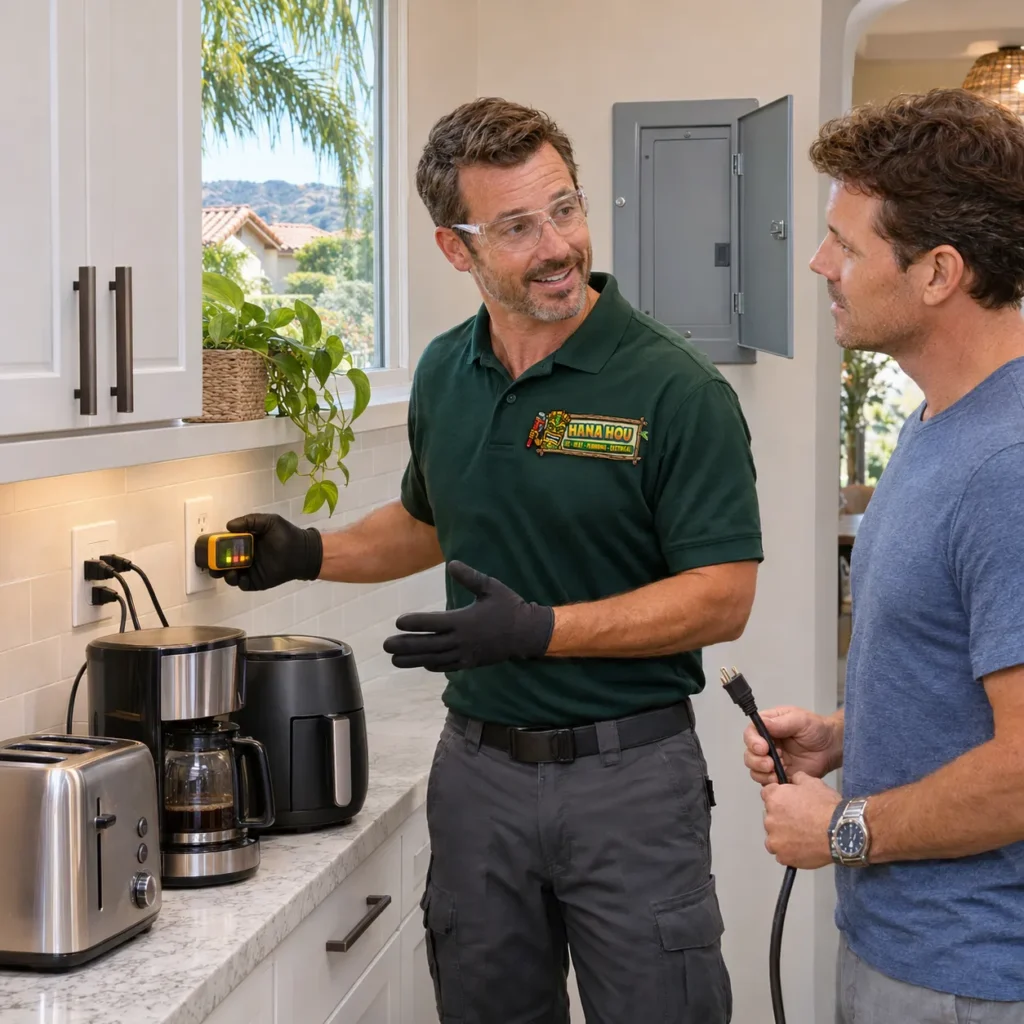
Tripping Breaker Laguna Hills: How It Trips Tells Us Why
The pattern of the trip says a lot. Notice which of these sounds like your house.
| How it trips | What it often means |
|---|---|
| Instantly, the moment power comes back | A short circuit in a device, cord or the wiring itself |
| After a few minutes of the hair dryer or microwave | An overloaded circuit, with too much running at once |
| Only when the yard is wet or a sprinkler runs | A ground fault, often moisture in an outdoor outlet, fixture or pool wiring |
| When one particular appliance starts | A failing appliance, or a circuit that cannot carry its start up surge |
| Now and then, with no pattern | A loose connection, or a worn breaker that no longer holds |
| Nothing is plugged in and it still trips | A fault in the wiring, a hardwired fixture or a breaker that has failed |
An instant trip and anything that feels hot are both reasons to stop and call. Write down what was running, because it helps us find the cause faster.
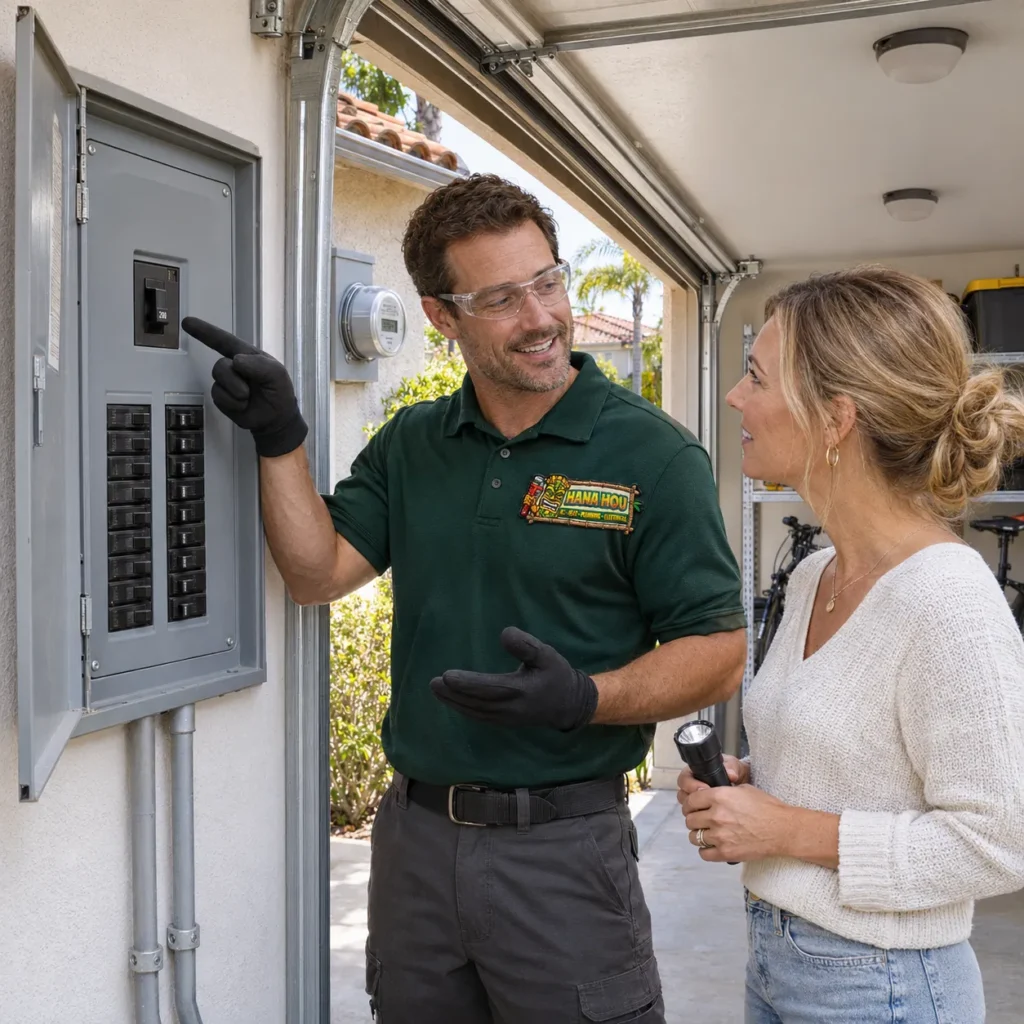
What to Check Without Touching the Panel
These steps stay at the outlets and the plugs. Stop and call us if any stop sign below appears.
- Unplug or switch off everything on the dead circuit, especially heaters, kettles and power strips.
- Press the Reset button on any GFCI outlets you can see in the kitchen, bathrooms, garage and outside.
- Write down what was running when the power went out, and how long it had been on.
- If one cord, plug or appliance feels hot or smells odd, leave it unplugged and put it aside.
- Call us with your notes. We take care of the panel and the breaker itself.
Stop if the power goes out the moment it comes back, a plug or plate feels warm, you smell burning, or you see sparks, moisture or scorching. The panel has live parts inside even with the door closed, so we leave it to a licensed electrician. Our circuit breaker installation page covers swaps.
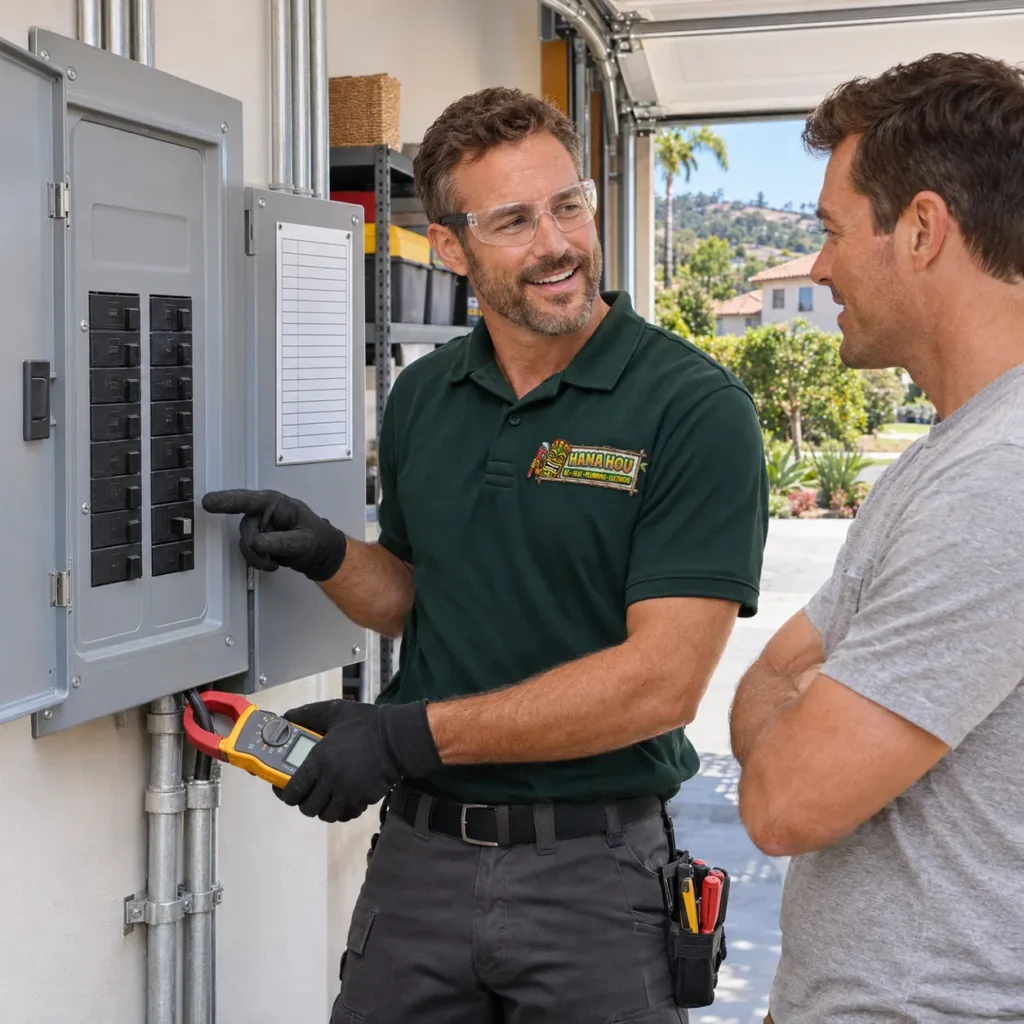
Five Reasons a Breaker Trips
Breakers trip for a handful of reasons, and each has its own fix.
Overload. Too many things on one circuit is the most common cause, and a heater, a kettle and a hair dryer together are a classic example. The fix is spreading the load, or adding a circuit.
Short circuit. A hot wire touching a neutral or ground trips the breaker at once. We find the damaged cord, device or wire and repair it.
Ground fault. Current straying to ground, often through moisture. GFCI protection reacts quickly, and we trace where the water gets in.
Arc fault. A loose or damaged conductor can spark inside a wall, and arc fault breakers are made to catch that.
A worn breaker. Breakers age too. Replacing one is quick, but a repeat problem can point to the panel itself, as in our breaker replacement guide.
You can check our California Contractor License #1075308 on the CSLB website.
How do I stop my circuit breaker from tripping?
A tripping breaker Laguna Hills homeowners deal with stops when the cause is removed. Cut the load by unplugging what is on that circuit, and do not keep forcing it back on. If it keeps tripping, a licensed electrician needs to test it. We explain the result on our electrical repair page.
Why does my circuit breaker immediately trip after I reset it?
An instant trip usually means a short circuit or a ground fault, either in a device or in the wiring. Do not keep resetting it, because that can heat a damaged wire. Unplug what you can, leave the circuit off and call us. We test the circuit with the load removed to find where the fault is.
Why does my 20 amp circuit breaker keep tripping even though nothing is plugged in?
Something is still drawing current or leaking it. It may be a hardwired fixture, a fault in the wiring, a failed GFCI or arc fault device, or a breaker that has worn out. This needs testing, and the panel stays closed until a licensed electrician arrives. See circuit breaker installation for swaps.
What does a tripped breaker look like?
The breaker handle usually sits between on and off, or at off. Seeing it means opening the panel door, which we do not ask homeowners to do. A better sign is that part of the house lost power. A GFCI outlet shows it with a popped Reset button. Tell us what went dead and we take it from there.
Is it dangerous when a breaker trips?
A single trip is the breaker doing its job. Repeated trips, a hot plug, a burning smell or a buzz can signal a fault that may overheat wires. Do not keep forcing it on. Keep the panel cover in place and call a licensed electrician.
Why does my breaker trip when I run a hair dryer or microwave?
These appliances draw a lot of current, so with other loads on the line the breaker trips to protect the wire. Plug the appliance into a wall outlet by itself, never a power strip, and try a different room. If it still trips, stop using it and call.
What is the difference between a short and an overload?
An overload is too much load for the wire, so the breaker trips after a while. A short is a hot wire touching ground or neutral, which trips it at once. We separate the two by testing the circuit with the load removed. Short testing is a core step.
Why does my GFCI outlet keep tripping?
A GFCI trips when it senses current straying, often from moisture or a damaged cord. Unplug what is on it, press Reset, and check outdoor and bathroom outlets for dampness. If it trips again with nothing plugged in, the device or wiring may be bad. Our outlet and switch guide gives more detail.
Can a breaker go bad even if nothing is wrong with the wiring?
Yes. Breakers wear with age and heat, and a weak one may trip at lower loads or fail to hold. Replacing one is usually quick, but we check the circuit first so the new breaker does not trip too. A circuit breaker upgrade is worth considering when the old one has failed more than once.
Can a breaker panel be repaired, or should I replace it?
Breaker panel repair usually means replacing a worn breaker or fixing a bad connection, and many panels can stay. If the panel itself is hot, scorched, crowded or damaged, replacement may be the real answer. We say so only after testing. Read about a panel upgrade.
What does it cost to replace a circuit breaker or the panel?
A single breaker is a small repair, while breaker panel replacement cost depends on the amp size, wiring and permit. We give a firm written price after testing, and we say plainly if a diagnostic fee applies. Our panel upgrade cost guide shows what moves it.
What is an arc fault breaker?
It is a breaker made to detect the small sparking of a loose or damaged wire and shut the circuit off. It can trip from a faulty cord or a loose connection as well. We find the source rather than swap the breaker. See our electrical wiring guide.
What does the 30 Day Encore Promise cover for a tripping breaker repair?
If the same breaker problem returns within 30 days of our repair, we come back at no charge. It does not cover a separate failure, new damage or maintenance. The terms are on our promise page.
When should a tripping breaker wait for a visit and when should I call right now?
Call right now for a hot plug, burning smell, sparks or an instant trip. A breaker that trips occasionally can usually wait a day or two if you stop using that load. A safety inspection is a good next step, and surge protection guards electronics from spikes, which is a different problem.
Why does my circuit breaker keep tripping in Laguna Hills?
A breaker trips when a circuit is overloaded, a wire shorts or a ground fault occurs, or when the breaker itself or a connection is failing. Because the cause varies, we trace the circuit before suggesting any parts.
Is it safe to keep resetting a breaker that keeps tripping?
No. A breaker that trips repeatedly is warning you about a problem. Leave the circuit off, unplug what is on it and have it checked. If you smell burning or see smoke, leave and call emergency services first.
Can a breaker that keeps tripping mean I need a panel upgrade?
Sometimes, when the loads on the panel have outgrown it. Often the problem is one circuit or device instead. We check the circuit before recommending anything, and explain panel upgrade options if that is the right answer.
More Laguna Hills services from our licensed team: