
Furnace Maintenance & Tune-Ups
Similar Services
Other Services
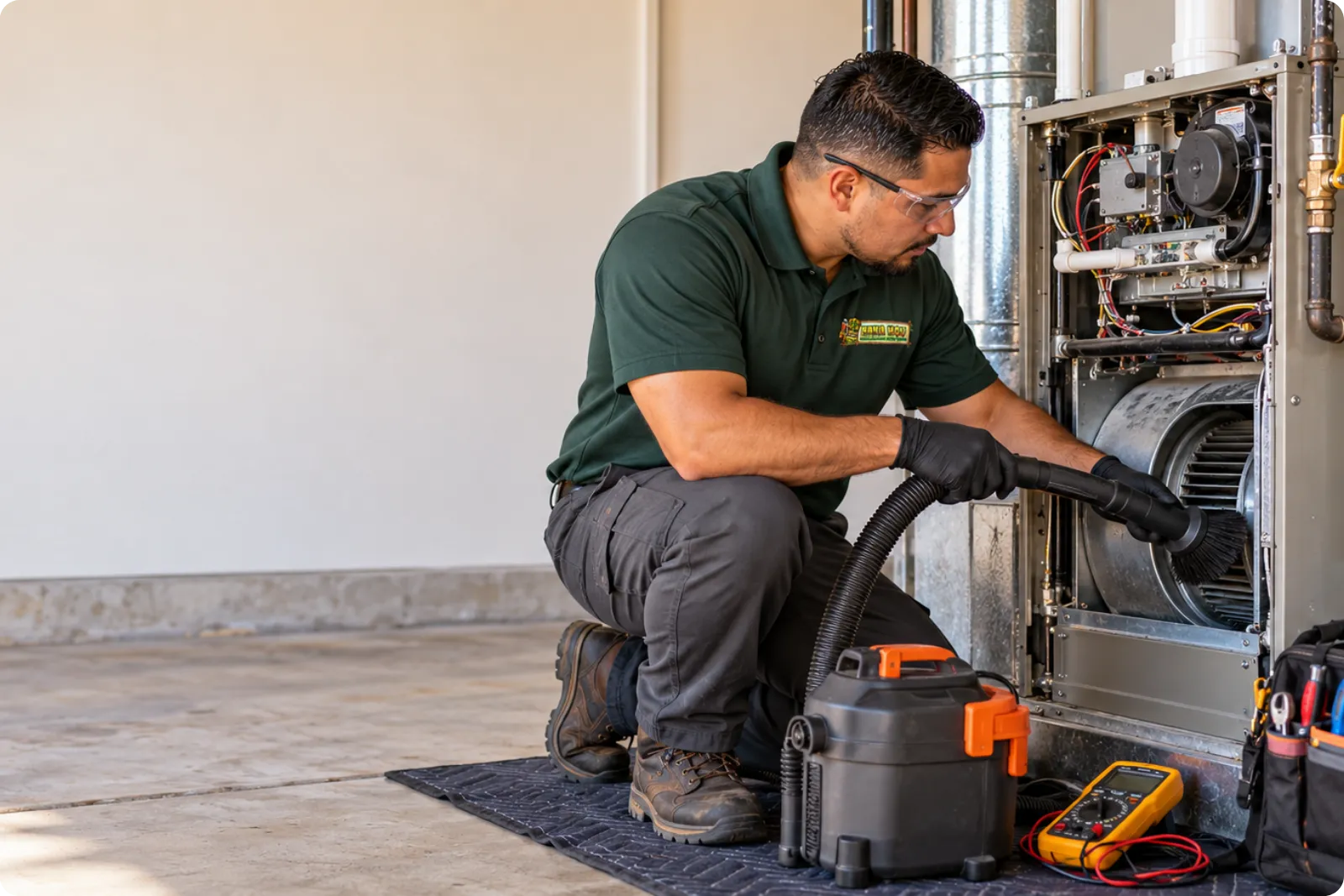
Furnace Maintenance
A professional furnace maintenance and tune-up should verify safe operation, airflow, ignition, venting and key controls before winter demand increases. Hana Hou Home uses a furnace-specific service to document condition, identify preventive needs and separate routine maintenance from issues that may require furnace repair. If the system is aging or performance is declining, we can also discuss furnace installation, broader heating maintenance, or related HVAC services. Homeowners can review current HVAC offers, learn about the Hana Hou Membership, or request service when the system needs attention.
Our furnace tune-up covers a combustion analysis, heat exchanger inspection, flame sensor and igniter cleaning, blower motor and belt check, gas pressure test, and a full safety inspection of the venting and flue. We’ll flag anything approaching failure, worn belts, a weakening capacitor, corrosion near the burner, before it strands you without heat. A standard single-furnace tune-up takes about 45-60 minutes, and we’ll walk you through what we found before we leave, no surprise recommendations by phone later.
How Often Does a Furnace Need Service?
A yearly tune-up before heating season makes sense for most homes, but book sooner if any of these apply.
- It’s been more than a year since your furnace was serviced
- You noticed a burning smell or unusual noise the first time you ran it this season
- Your gas bills are climbing without a change in how you’re using the system
- The furnace is 10+ years old and has never had a combustion analysis
- You have a wood-burning fireplace or gas appliances sharing venting with the furnace
- You want to catch small issues before they become a mid-winter repair call
If your furnace is already showing symptoms, skip ahead to our furnace repair page instead of waiting for a routine visit.
A furnace that’s tuned every fall runs more efficiently, keeps its warranty coverage intact, and is far less likely to fail the exact week you need it most. It’s the cheapest insurance against a mid-winter breakdown and typically pays for itself in lower gas bills alone. Our ‘Ohana Membership plan bundles annual furnace and AC tune-ups with priority scheduling, so you’re never on the waitlist during the first cold week. Read what members say on our reviews page.
Why Choose Hana Hou Home
Full Combustion Analysis Every Visit
We test actual gas pressure and burn quality, not just a visual check of the burner flame.
Heat Exchanger Safety Inspection
Every tune-up includes a check for cracks or corrosion that could let carbon monoxide into your home.
30-Day Encore Promise
If the same issue shows up within 30 days of installation, we come back and fix it at no charge.

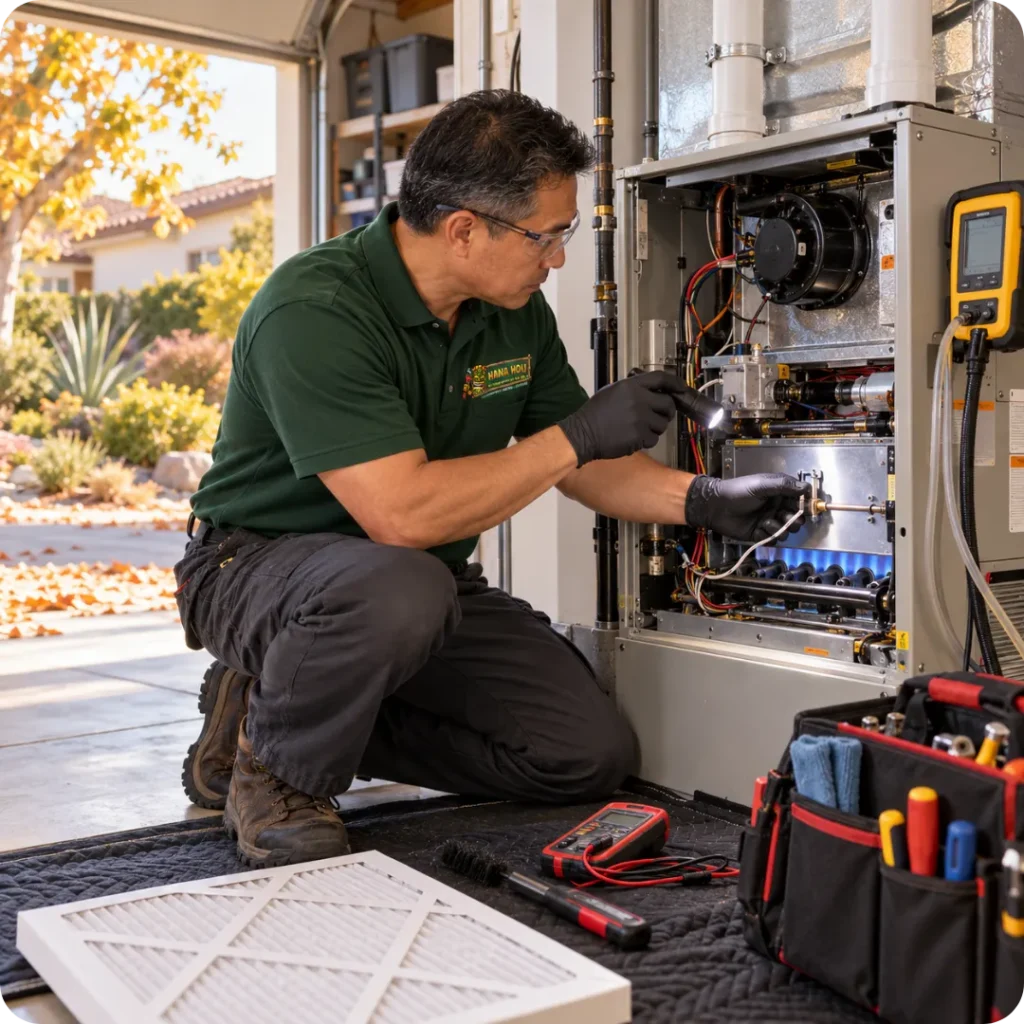
Fall Furnace Tune-Up
Get Ahead of the First Cold Snap
Booking your tune-up in October or early November means you’re not competing with every other no-heat call in the county once temperatures drop. See our Laguna Woods furnace maintenance visit for a real example.
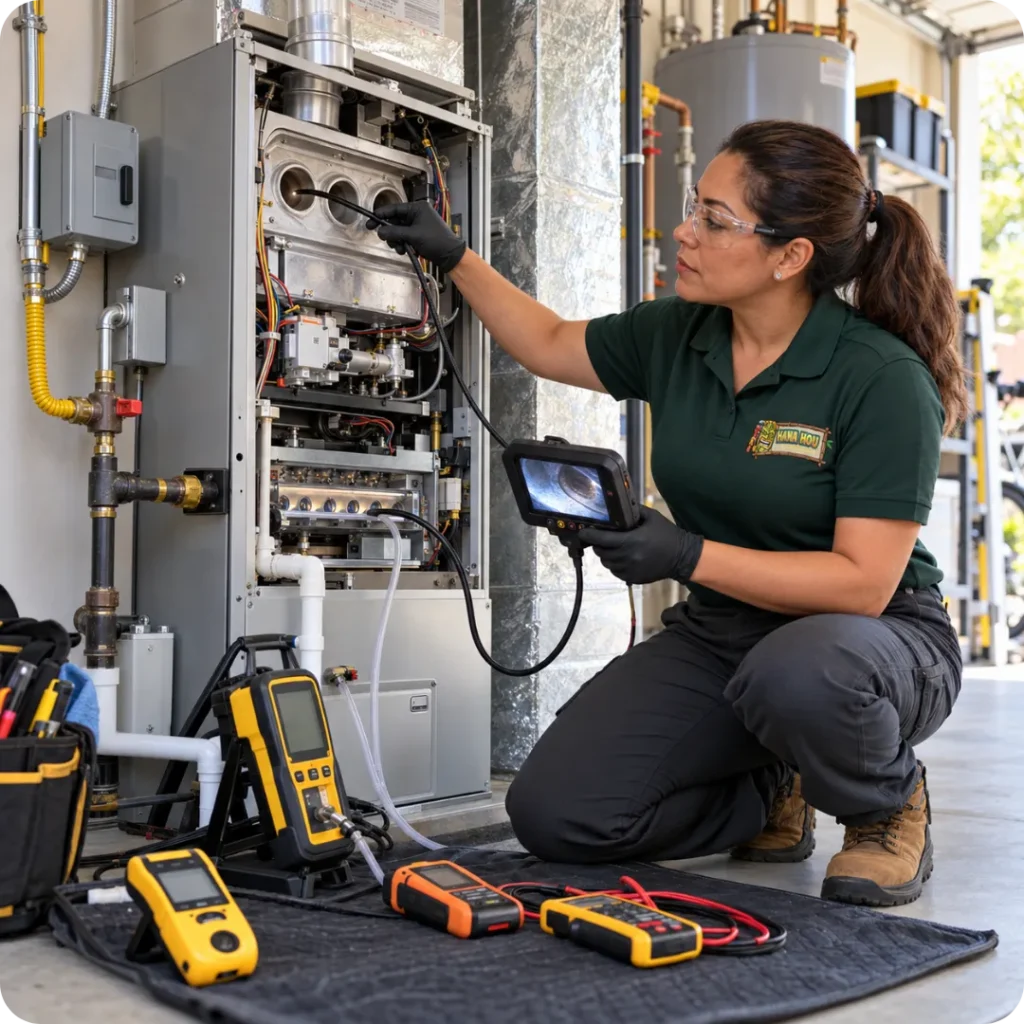
Furnace Safety Inspection
Heat Exchanger & Carbon Monoxide Check
A cracked heat exchanger is the most serious thing we check for, since it can let combustion gases mix into your breathing air with no obvious symptom. Learn more in our Foothill Ranch inspection guide.
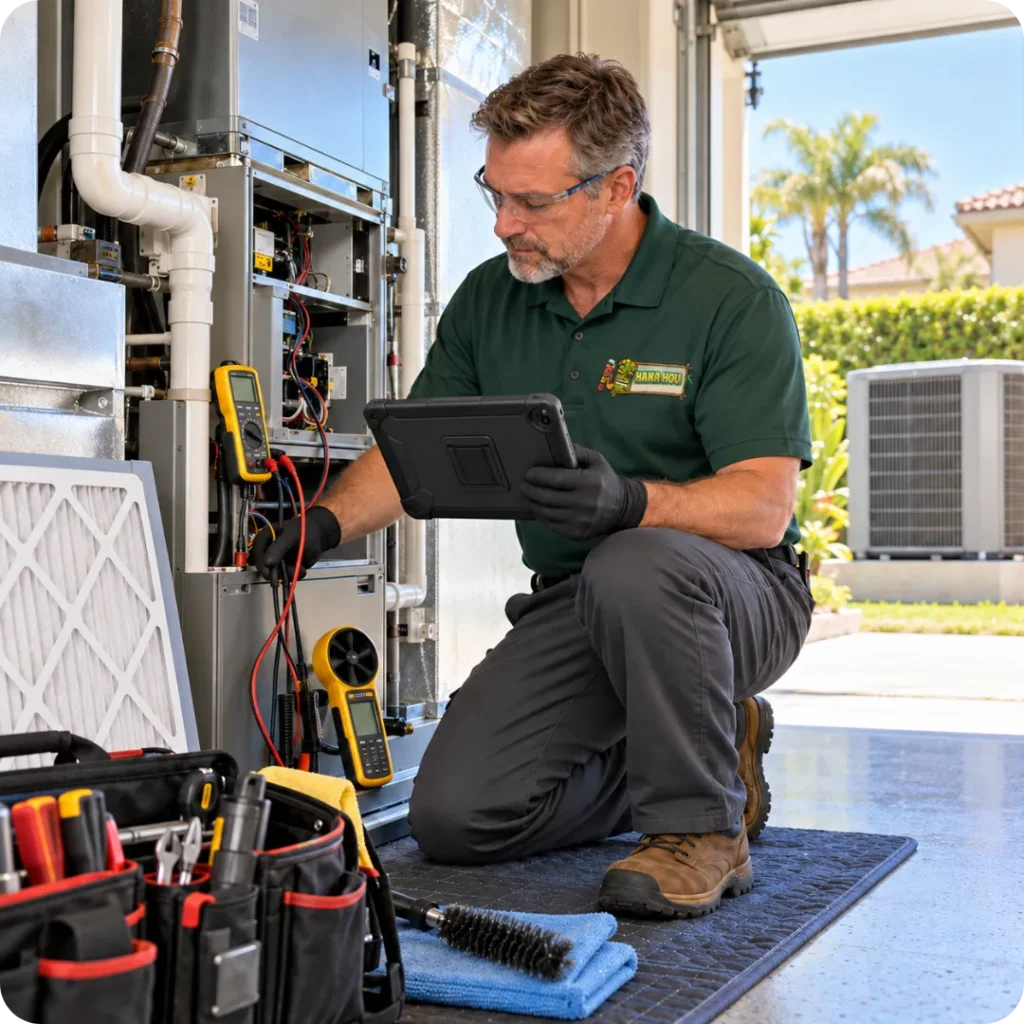
Annual Maintenance Plans
Never Miss a Season Again
Our ‘Ohana Membership schedules your furnace and AC tune-ups automatically each year and includes priority booking, so you’re first in line during peak heating and cooling weeks.
Frequently Asked Questions
How often should a furnace be serviced?
Once a year, ideally in the fall before you start running it daily, is enough for most gas furnaces. Homes that run the furnace heavily, or units past 12-15 years old, benefit from sticking to that schedule strictly rather than skipping a year. Our ‘Ohana Membership handles the scheduling so it doesn’t slip.
What does a furnace tune-up actually include?
A proper tune-up covers a combustion analysis, heat exchanger inspection, flame sensor and igniter cleaning, blower and belt check, gas pressure test, and a flue and venting inspection, not just a filter swap. We walk through everything we found on-site rather than sending a report later. See a real visit on our Laguna Woods maintenance page.
How much does a furnace tune-up cost?
A standalone tune-up typically runs in the range of a standard service call; the exact price depends on furnace type and whether it needs more than a routine visit. Members on our ‘Ohana Membership plan get annual tune-ups included along with a discount on any repairs found during the visit.
Can a furnace tune-up prevent a breakdown?
Yes, most no-heat calls we get trace back to something that was visible during a proper inspection, a weak flame sensor, a worn belt, low gas pressure, well before it caused a full failure. If your furnace has already stopped working, head to our furnace repair page instead.
What's a combustion analysis and why does it matter?
A combustion analysis measures the actual gas-to-air mixture and exhaust composition the furnace is burning, catching inefficient combustion or carbon monoxide risk that a visual flame check would miss entirely. It’s part of every tune-up we do and something a lot of basic “filter and go” services skip.
Do I still need a tune-up if my furnace is new?
Yes, most manufacturer warranties require documented annual maintenance to stay valid, and skipping it for even one year can void coverage on a repair down the road. It’s also the best way to make sure a new furnace install keeps running at its rated efficiency instead of drifting downward unnoticed.
When is the best time of year to schedule furnace maintenance?
September or October, before the first genuinely cold week, is ideal, since that’s when scheduling is easiest and any issue we find can be fixed before you’re actually relying on the system. Waiting until the first cold snap means competing with every other homeowner having the same idea at once.
Can I do furnace maintenance myself?
Changing the filter every 1-3 months is a homeowner task, but combustion analysis, heat exchanger inspection, and gas pressure testing require equipment and training most homeowners don’t have. A cracked heat exchanger in particular is very hard to spot without the right tools, which is why we check it on every professional visit.
What are signs my furnace needs a tune-up right now?
A burning smell that doesn’t clear after a few minutes of running, rising gas bills, uneven heating between rooms, or simply not remembering the last time it was serviced are all reasons to book now rather than wait for fall. If it’s already not producing heat, that’s a repair call, not a tune-up.
How do I schedule a furnace tune-up?
Book through our contact page or call directly, and we’ll get you scheduled before the fall rush. Ask about our ‘Ohana Membership plan for automatic annual scheduling, and check our current coupons before you book.