
EV charger installation Orange County
Home > Electrical / EV Charger Installation
Level 2 EV charger installation for Orange County homes, wired to a dedicated circuit and sized for your panel’s real capacity.
Similar Services
Schedule Your EV Charger Installation
Other Services
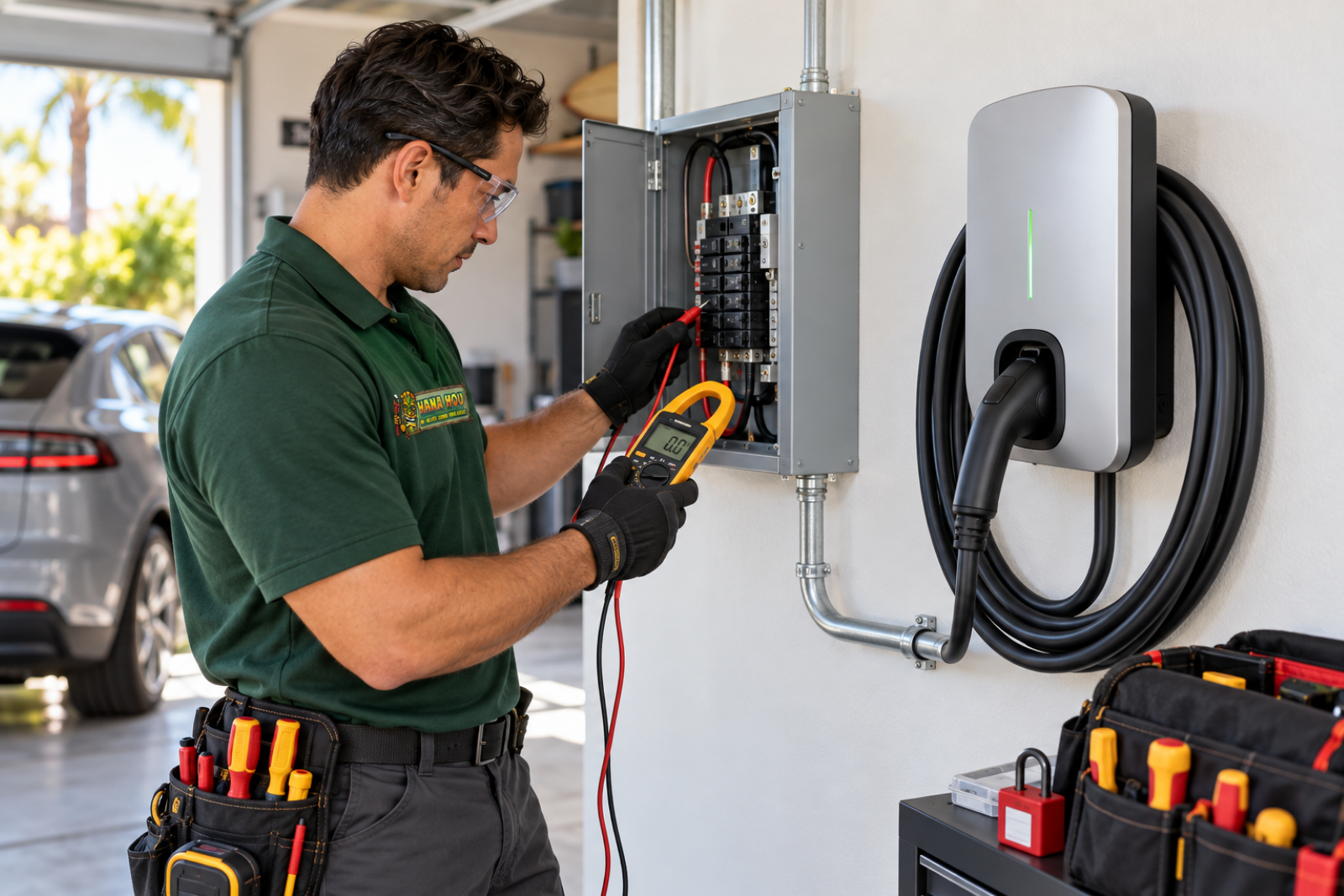
EV Charger Installation
Hana Hou Home installs Level 2 EV charging equipment for Orange County homeowners. Before recommending a circuit or panel change, our electrical team reviews the vehicle and charger specifications, daily charging needs, panel condition, calculated household load and the route to the parking location. You receive a written scope and upfront price before authorized work begins.
The real question with an EV charger usually isn’t which charger, it’s whether your panel has room for it.
We start by checking your panel’s current load and available capacity, then run a dedicated circuit sized to your specific charger’s amperage requirement. If the panel is already at capacity, we’ll walk you through what a panel upgrade would add before you commit to the charger installation, rather than starting the job and discovering a bigger problem partway through. Every installation is pulled under permit and inspected.
Does Your Panel Have Room for an EV Charger?
These are the signs your panel may need attention before adding an EV charger.
- Your home still has a 100-amp panel
- The panel is already physically full with no open breaker slots
- You’re also running central AC, an electric range, or other high-draw appliances
- You’re planning to add a spa, ADU, or second EV charger down the line
Our panel upgrade team can confirm exactly what your panel supports before you buy a charger.
Getting the circuit sizing and panel capacity right the first time is what keeps an EV charger installation from becoming a tripped-breaker problem later. Every installation comes with our 30-day Encore Promise. Related reading: see our EV charger installation cost guide for Newport Beach.
Why Choose Hana Hou Home
Panel Capacity Checked First
Every quote includes confirming your panel can actually support the new circuit.
Dedicated Circuit, Done Right
Sized to your specific charger's amperage, not a generic hookup.
30-Day Encore Promise
If the same issue returns within 30 days, we come back at no charge.

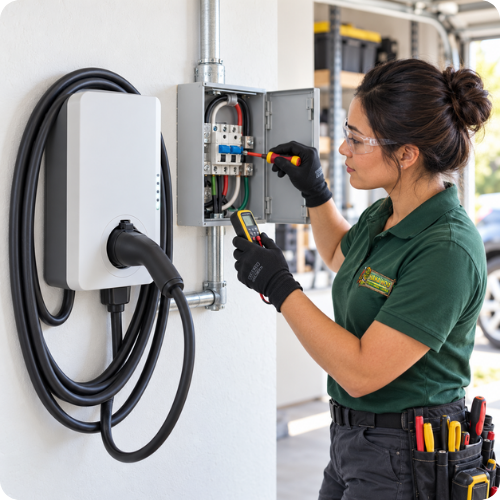
Level 2 Charger Installation
240-Volt Dedicated Circuits
A Level 2 charger installed on its own dedicated 240-volt circuit charges significantly faster than a standard outlet, and is the standard we install for daily home charging.
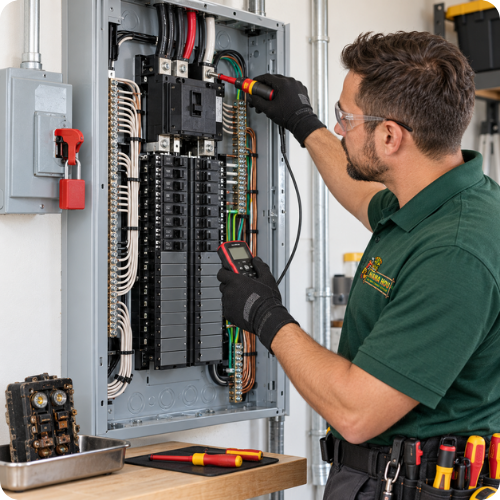
Panel Capacity Upgrades
When Your Panel Needs More Room
Many Orange County homes on a 100-amp panel need a capacity upgrade before an EV charger can be added safely. See our panel upgrades page for details.
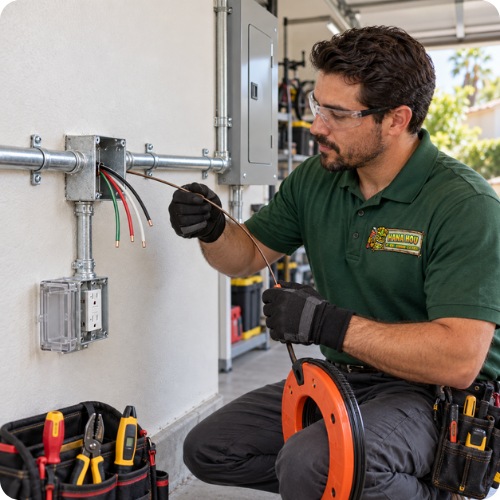
Garage Circuit Wiring
Routed Cleanly to Where You Park
Running the new circuit from the panel to your garage or driveway is planned around your specific parking setup, not a one-size-fits-all path.
Frequently Asked Questions
How do I request an EV charger installation quote from Hana Hou Home?
Call (949) 876-5022 or use the online service request. Provide the vehicle model, charger model if already selected, desired parking location, approximate panel location, daily driving needs and whether a second EV or other major electrical load is planned. The evaluation should confirm load capacity, circuit size, route, charger placement, permit responsibility and the complete upfront price. Ask whether installation, equipment mounting, commissioning and inspection coordination are all included.
Can an EV charger be installed outdoors or in a driveway?
Yes, when the charging equipment, enclosure, mounting method and wiring system are rated for the outdoor environment and installed according to manufacturer and local requirements. The site plan should protect the charger and cable from vehicle impact, standing water, excessive cable strain and avoidable trip hazards while keeping the connector within easy reach of the vehicle. Long exterior runs or detached parking may require trenching or additional protection. Hana Hou Home’s quote should identify the proposed route, equipment rating and any restoration work associated with outdoor EV charger installation.
Can one home support two EV chargers?
Many homes can support two EVs, but the best design depends on available service capacity, charging schedules, vehicle needs and equipment features. Options can include two dedicated circuits, chargers with power sharing or an approved energy-management system that limits simultaneous demand. Installing the largest possible circuit for the first vehicle is not always the most flexible plan. Tell the electrician about the second vehicle before the first installation so conduit, location and capacity can be planned efficiently. Any recommendation should be based on a documented load assessment rather than panel size alone.
How long does a residential EV charger installation take?
A straightforward installation near a compatible panel may be completed during one visit, but no universal “few hours” promise fits every project. Longer conductor routes, attic or crawlspace access, exterior trenching, drywall work, load-management equipment, panel changes, permitting and inspection schedules can extend the project. The written estimate should identify the expected on-site work and any separate inspection or utility steps. Ask whether charger commissioning, app setup and a basic charging test are included. Contact Hana Hou Home for a project-specific timeline.
Does an EV charger installation require a permit in Orange County?
A new 240-volt EV charging circuit commonly requires an electrical permit and inspection, but the exact process and documentation depend on the city and installation. The website should not treat Orange County as one permitting authority. Ask who will confirm the requirements for the property, submit any load calculation or site plan, arrange inspection and provide final records. Installation must follow applicable state and local rules as well as the charger manufacturer’s instructions. Hana Hou Home can confirm the process for homes within its published service area.
Should I buy the EV charger before the electrician evaluates my home?
It is usually better to confirm the vehicle’s charging specifications, panel capacity, circuit route and installation environment before purchasing equipment. The electrician can help identify suitable output, plug-in versus hardwired configuration, cable reach, indoor or outdoor rating, network features and safety certification. Buying first can limit options if the selected unit requires more capacity than the home can support or is not suitable for the mounting location. Bring the vehicle model, expected daily mileage and preferred charger specifications to the evaluation. Hana Hou Home can then quote the correct EV charger installation scope.
How much does EV charger installation cost in Orange County?
Cost depends on charger type, circuit size, panel capacity, distance and route from the panel to the parking location, wall construction, trenching, outdoor-rated equipment, permits and whether load management or panel work is needed. A charger mounted near a suitable panel has a different scope from a detached-garage or long outdoor run. The final price should follow a site and load evaluation. Hana Hou Home provides upfront pricing before approved work begins. Compare the EV charger cost factors and installation cost guide.
Do I need a panel upgrade before installing an EV charger?
Not necessarily. A 100-amp service or a panel with no empty breaker spaces does not by itself prove that a full service upgrade is required. The electrician should perform the applicable load calculation, inspect panel condition and compatibility, and consider the charger output, other large loads and approved load-management options. Some homes need a new circuit only; others may require a subpanel, managed charging or a service upgrade. Ask for the calculation and alternatives before approving major work. Review Hana Hou Home’s panel upgrade service if capacity or condition is genuinely insufficient.
Does every Level 2 EV charger need a 40- to 60-amp circuit?
No. Level 2 equipment is available at different charging rates, and the required branch circuit depends on the charger’s maximum continuous current, configuration and manufacturer instructions. A charger drawing 32 amps does not have the same circuit requirement as a higher-output unit. The electrician should review the exact charger specifications, vehicle charging capability and desired speed before sizing the breaker and conductors. Avoid buying equipment based only on a generic “40- to 60-amp” recommendation. Hana Hou Home should document the proposed charger output and dedicated-circuit size in the installation quote.
What is the difference between Level 1 and Level 2 home EV charging?
Level 1 charging generally uses a 120-volt outlet and may meet the needs of drivers with shorter daily mileage or long overnight parking periods. Level 2 charging uses 240-volt equipment and normally adds range faster, making it useful for longer commutes, larger batteries or less predictable schedules. Level 1 is not merely an emergency option; the right choice depends on the vehicle, daily driving, available circuit and charging time. Hana Hou Home specializes in Level 2 EV charger installation after evaluating the home’s electrical capacity.